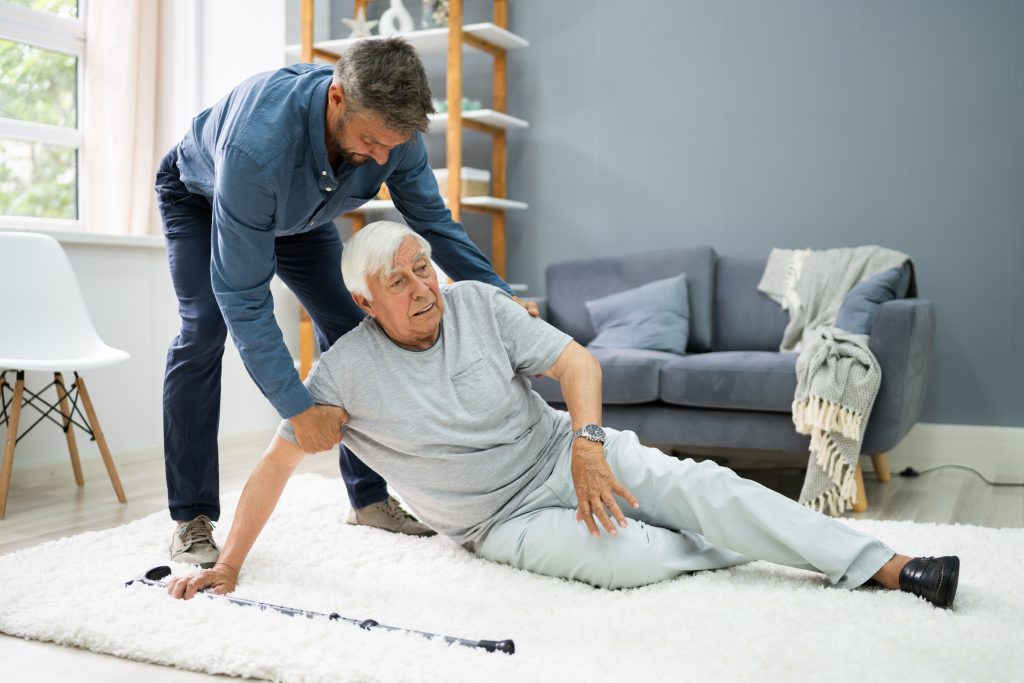
Quick answer: A single fall prevention assessment with a physical therapist can meaningfully change you or your loved one’s long-term health trajectory. Even though one in four adults over 65 falls each year, falls can be prevented. You or your loved one can learn to improve balance, strengthen key muscles, and move more independently through physical therapy.
For many older adults, a fall isn’t just an accident, it’s a turning point. It changes the way they move through their home, how they feel about their independence, and how their family thinks about their future.
But falls aren’t inevitable. Yes, accidents are always possible, but with a stronger sense of balance, better assistive devices, and stronger, more resilient muscles, the risk can be meaningfully lowered.
Most common causes of falls
Everyone has different experiences of getting older, whether they have an expectation of staying fully active and independent or are early adopters of mobility aids. Regardless of the person’s lifestyle, there are underlying reasons why falls become more likely as a person ages. Understanding them is the first step toward preventing them.
Common risk factors include:
- Muscle weakness, especially in the legs and core
- Balance and coordination decline, often gradual and unnoticed
- Slower reaction times, which reduce the ability to self-correct a stumble
- Vision changes that affect depth perception and peripheral awareness
- Medication side effects, including dizziness, drowsiness, and blood pressure fluctuations
- Home environment hazards, such as poor lighting, loose rugs, and lack of grab bars
These underlying causes tend to be the most common reasons beyond the specific circumstances of a fall. And this consistency is actually good news. It means the risks are measurable. It means there are only a few areas to work on to start mitigating fall risk.
Physical therapists can assess these factors and provide an evidence-based fall risk score to help you and your loved one make decisions about their mobility and independence.
How PT helps
Physical therapists can design personalized strength, balance, and flexibility exercises to help people of all ages and abilities achieve more stable movement and better independence.
Evidence-based exercise training
Each person looking to reduce the likelihood of falling will benefit from different types of evidence-based exercises to strengthen key areas responsible for balance and stability.
These usually include simple, gentle movements to strengthen areas of the body such as:
- Quadriceps
- Glutes
- Hip abductors
- Ankles
Your PT will likely create exercises that safely replicate real-life movements that tend to be high-risk for causing falls, like sit-to-stand repetitions and stair climbing.
In addition to strength training, improving flexibility and range of motion can address stiffness in the hips, ankles, and spine. Stiffness in these areas commonly restricts the natural movement needed for quick recovery from a misstep.
Balance training exercises might include:
- Tandem stance and walking: stepping heel-to-toe along a line
- Weight shifting exercises to strengthen the body’s ability to redistribute balance dynamically
- Dual-task training, which combines movement with a cognitive task to simulate real-world distractions
- Perturbation training, where a therapist introduces gentle, controlled instability to train reactive stepping and recovery
These approaches train the nervous system, not just the muscles. The brain’s sense of motion and where it is in space is as important as having the strength to catch yourself before a fall.
Specialized fall prevention programs
Structured, evidence-based programs have been developed specifically for fall prevention, and physical therapists often use them as frameworks alongside individualized care.
LSVT BIG is a specialized movement program for people with Parkinson’s disease. It addresses the small, shuffling movements that often accompany Parkinson’s, significantly increasing a person’s fall risk. Lee Silverman Voice Treatment (LSVT) BIG works by training patients to make larger, more deliberate movements, recalibrating their sense of what “normal” movement feels like and re-training the body to use the full range of motion available to each limb. (Nearly all Alliance Partners provide LSVT BIG at one or more locations. Please call a local clinic for details.)
Besides this and other nationally recognized programs, individual clinics often develop their own specialty programs tailored to the specific needs of their community—whether that’s a population with high rates of diabetic neuropathy, post-operative needs, or older adults living in assisted care settings. Local physical therapy clinics learn what their community needs over time and individual clinicians may even pursue specialty certifications to better support them.
Beyond Exercise: Home Safety and Caregiver Guidance
Finally, physical therapists are well-positioned to recommend practical measures that extend the impact of in-clinic work into everyday life.
A PT can typically recommend adaptive equipment—grab bars, shower chairs, walking aids, non-slip mats, etc.—and may even offer to identify specific hazards in a patient’s home environment.
Caregivers and/or adult children can also benefit from the guidance of a PT. Physical therapists can help bridge the knowledge and experience gap by explaining what kinds of changes are worth worrying about, and offering advice about how to have conversations that can otherwise feel uncomfortable or confrontational.
Fall prevention assessment
A fall prevention assessment takes a single visit and can have a dramatic impact on a person’s life. Fall prevention physical therapy provides actionable, personalized information that can shape how you or your loved one moves, ages, and maintains independence for years to come.
Request an appointment today by clicking on your brand below!