
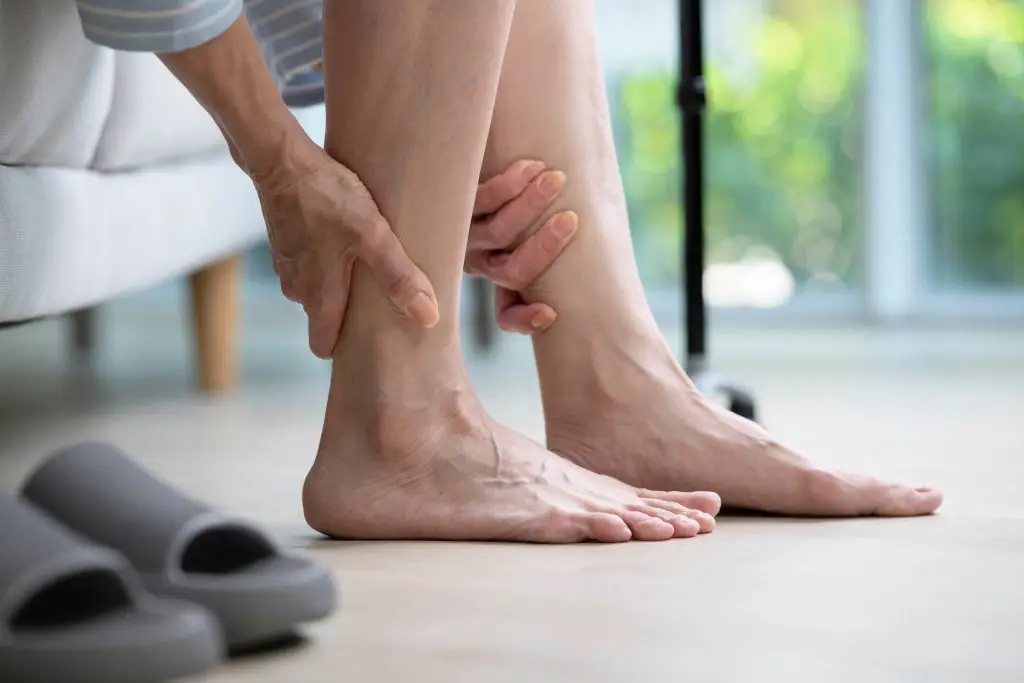
It’s a frustrating and possibly even embarrassing condition to deal with. Every step off a curb, stroll through uneven grass, or flight of stairs can trigger that familiar, terrifying wobble. For some, it’s a sharp pain followed by a tumble. For others, it’s a nagging sense of instability that makes every step feel uncertain.
The feeling of weak ankles is not a diagnosis, but rather an indication that something else in your legs or ankles may need attention. If you find yourself constantly looking at the ground to avoid tripping or wearing high-top shoes just to feel secure, you might benefit from something as simple as new shoes or a guided physical therapy plan to help.
What causes the feeling of weak ankles?
Understanding why your ankles feel vulnerable is the first step toward fixing the problem. Genetics play a role in the anatomy of your ankles and lower legs, but there are often more complex biomechanical issues at play that may not be solved by simply doing a ton of exercises.
Each foot and ankle contain 26 bones, 33 joints, and more than 100 muscles, tendons, and ligaments—which is what makes professional guidance is so important. When you just assume your ankles are weak, you might end up doing exercises that aggravate a more nuanced problem with specific ligaments, muscles, or joints.
Here are a few common culprits behind the feeling of weakness in the ankle:
Chronic ankle instability
Chronic ankle instability (CAI) is perhaps the most common cause of frequent ankle sprains. If you have sprained your ankle in the past and didn’t rehabilitate it fully, the ligaments may have healed loosely. Think of a rubber band that has been stretched too far and never quite snaps back to its original tightness. This looseness impairs your proprioception—your body’s ability to sense where your foot is in space—making you more likely to roll it again.
Hypermobility
Some people are born with naturally looser ligaments. If you’ve always been “double-jointed” or more flexible than your friends, you might have hypermobility.
While this condition can be an advantage in activities like gymnastics or dance, it means your muscles have to work overtime to stabilize your joints. When those muscles fatigue, your ankles can give out more easily, more often.
Muscle weakness or atrophy
An obvious cause of ankle weakness is—you guessed it: weak muscles. Specifically the peroneal muscles on the outside of the lower leg. If you’ve become less active recently, or if you’ve been wearing a brace for too long without doing strengthening exercises, these muscles can weaken (atrophy), leaving the joint unsupported.
Poor foot support
The structure of your foot affects your ankle stability. If you have flat feet, your ankles may roll inward (overpronation), putting stress on the inside of the ankle and throughout your lower limbs. Conversely, if you have very high arches, your foot may more easily roll outward (supination), which causes different but equally problematic tension throughout your body.
This kind of anatomical difference can be corrected by having properly fitted shoes, condition-specific shoe insoles, or custom orthotics that are tailored to your feet.
Symptoms of ankle weakness
Different underlying conditions will present you with different symptoms throughout your daily life. These are some of the more common indicators that something might be worth treating through physical therapy:
- Frequent “giving way” – This is the hallmark symptom of ankle instability. It’s the sensation that your ankle is buckling underneath you, even on flat surfaces or during low-intensity activities. It doesn’t always result in a fall, but the feeling of instability is constant.
- Recurring soreness – You might notice a dull ache in your feet, ankles, or lower legs nearly every day that gets worse with increased activity. This is often muscle soreness arising from stabilizing a loose joint or compensating for asymmetrical biomechanics.
- Persistent swelling – If your ankles look puffy or swollen after exercise—even if you didn’t twist them—it could be a sign of chronic inflammation caused by instability.
- Poor Balance – Try standing on one leg with your eyes closed (stand near a wall for safety!). If you can’t hold the position for more than a few seconds without putting your other foot down or flailing your arms, your ankle stabilizers may be weak or atrophied.
- Difficulty on uneven ground – If walking on sand, cobblestones, or grass feels like an impossible challenge, you may benefit from strengthening muscles throughout your lower limbs.
Treatment options for recurring ankle problems
Some ankle instability is mild, temporary, and able to be treated with rest or a gradual return to your normal activities. However, chronic or recurring instability or injuries may be better treated with professional guidance from a physical therapist.
No matter what treatment method you start with, remember that you won’t suddenly feel remarkably better overnight. Rebuilding stability is a process of retraining both the muscles and the nervous system.
It’s also important to note that, because the ankles are complex, one person’s cure might make another person’s condition worse. For example, a stability shoe that helps someone with flat feet might cause ankle rolls in someone with high arches.
Physical therapy and strengthening
Physical therapy is the standard, most accessible treatment option for treating weak ankles. A physical therapist won’t just tell you to do calf raises; they will assess your entire movement pattern to treat the entire underlying cause. Everyone’s treatment will be different, but components of a physical therapy plan of care often include:
- Balance training: Exercises on wobble boards or foam pads to retrain your proprioception.
- Strengthening: Targeting the peroneal muscles, calves, and even the hips (glutes) to ensure the entire leg supports the ankle.
- Range of motion work: Stiffness can sometimes cause instability, so improving flexibility is key.
Footwear changes
Sometimes, the solution is under your feet. If your shoes are worn out or don’t suit your foot type, they can exacerbate ankle instability. A physical therapist may be able to give you recommendations based on your diagnosis, or you can explore condition-specific shoe types on your own.
Bracing and taping
For those who need a quick solution to returning to a specific activity on short notice, external support can be helpful.
- Ankle braces: These provide rigid or semi-rigid support to prevent rolling. They are great for high-risk activities but shouldn’t be relied upon 24/7, as they can cause the muscles to weaken further over time.
- Kinesiology tape: This flexible tape provides sensory feedback to the skin, helping your brain be more aware of the ankle’s position without restricting movement.
Orthotics
If your foot structure is the root cause, custom orthotics can help realign the foot, taking pressure off the ankle joint and providing a neutral foundation for movement.
Find comprehensive care at PT & Spine
Living with the fear that your next step could result in an injury is exhausting. It limits your freedom and keeps you on the sidelines of your own life. But it’s also something you can take action to help treat.
At PT & Spine in New Orleans, we believe in treating the whole person, not just the injury. We understand that your ankle pain is unique to your body, your history, and your lifestyle. Many ankle pain sufferers are shocked when we can trace their pain, to different underlying issues in the foot, the knee, or even the hips.
We are here to help you build a strong foundation so you can get back to doing what you love with confidence. If you’re ready to say goodbye to the wobble and hello to stability, request an appointment today at PT & Spine.